Showing posts with label Art. Show all posts

Sunday, 4 January 2015

Surrealism Art Essay


Surrealism is an art movement that originated from the Dadaism. Surrealism, in contrast of Dadaism, wanted to reestablish the strange, fun, imaginative and freedom of art itself. (The Life and Art of Salvador Dali – Discovery/History/Biography (documentary), 2014)


This movement consisted of strange paintings that manipulated everyday objects into a strange form. The founder of this movement is the French medical student and poet, Andre Breton in which he took inspiration from dreams as they symbolize the inner thought of one’s mind. During the early years of surrealism, it consisted more of a literary group until Italian paint “Giorgio De Chirico” filled the gap between romantic art and surrealism. (The Shock of the New – Ep5 – The Threshold of Liberty, 2014)

This painting by Giorgio De Chirico shows a similar dream like style of painting that is very common in surrealism. De Chirico wanted to show the torn world created because of World War 1 by using humanoid forms, destroyed architecture and dark, eerie streets. (Moma, The Song of Love) In my opinion the painting has a very interesting symbolist feel. The strange and out of the ordinary large object automatically attract the viewer and makes him ask questions because of the mysterious nature of the picture. Because of the mystery behind the picture, viewers would find it even more interesting as because we as humans, love and fear the unknown.

For surrealists such as Chirico’s student, Max Ernst, he believed that the irrational mind is the perfect source for this movement. Surrealist’s looks at three main sources such as the Children art they believed the innocent eye is not repressed as to that of adults. Madness and was also a large source for inspiration as surrealists believed this is the highest form of revoke to a tolerable world. The last source of the irrational was primitive art because of the “pure” look of the style. (The Shock of the New – Ep5 – The Threshold of Liberty, 2014)
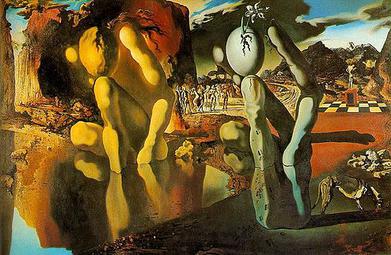

During this movement, one of the most important figures of surrealism would be the Spanish painter, Salvador Dali. Dali’s work changed art during that time. He created paintings with illusions and often manipulated objects to appear somewhat differently; this method could be seen in the painting called “The Metamorphosis of Narcissus” were Dali converted Narcissus’ reflection into a hand holding an egg. Dali also was fascinated in “Double image” paintings as well. Dali commonly placed his inner memories, anxieties and sexual thoughts in his paintings. (The Life and Art of Salvador Dali – Discovery/History/Biography (documentary), 2014)

Persistence of Memory is considered as Dali’s most famous piece.  The painting shows a beach landscape in the background and 4 clocks melting in the foreground. Dali based this image from his home, Colombia. Dali wanted to show to confuse viewers of reality by painting small details on the decaying clocks. Some even say that the creature in the middle of the painting is a self portrait of Dali himself. (Moma, The Persistence of Memory)
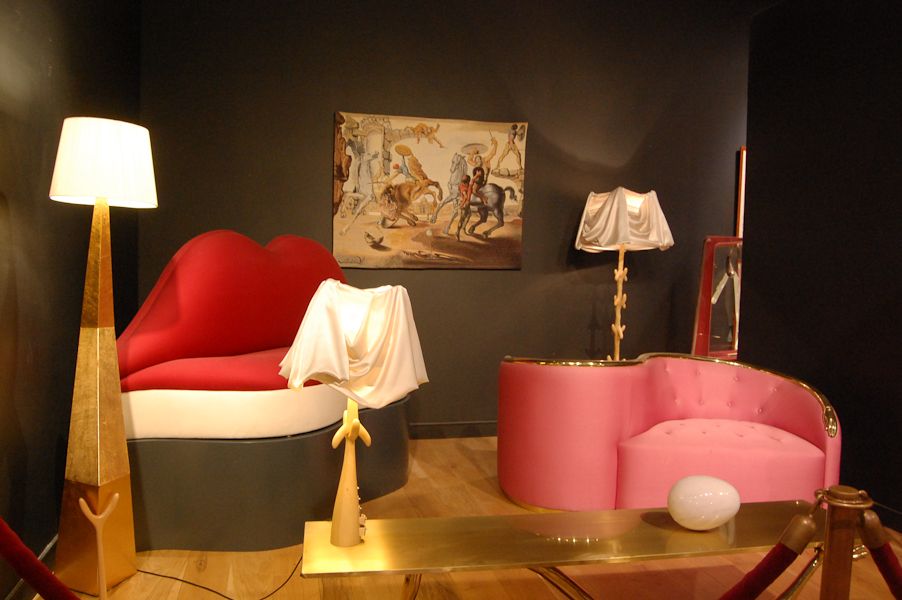
Dali’s work ranged from paintings and fashion to even cinema. His work had a huge influence towards interior design because of the fun and original look they would have. Surrealism changed art even today. Interior designers still use surrealist style because of its fun and original nature. Surrealism painting is still in practice today and many contempory artists are influenced by Surrealism’s style, ideas and technique. (The Life and Art of Salvador Dali – Discovery/History/Biography (documentary), 2014)

Digital media is commonly used in contempory Surrealism art nowadays as it gives some advantages to easily manipulate pictures. An example for this could be seen in Saeed Khalifa’s surrealist gallery where he manipulates images together to create a dream-like image. (Artsy, Saeed Khalifa, 2014)


Bibliography

1.) The Life and Art of Salvador Dali – Discovery/History/Biography (documentary), 2014 (video file), Available from: <https://www.youtube.com/watch?v=GONauCKYj0s>. [Accessed 27 December 2014]
 2.) The Shock of the New – Ep5 – The Threshold of Liberty, 2014 (video file), <https://www.youtube.com/watch?v=f0HeSrqXKps >. [Accessed 27 December 2014]
3.) Arcandilla, Surrealism and how it is Used Today, 2011. Available from: <http://www.1stwebdesigner.com/inspiration/modern-surrealism-and-history/>. [Accessed 27 December 2014]

4.) Saeed Khalifa, Rokn V (2014), Arty, 2015, Available from: <https://artsy.net/artwork/saeed-khalifa-rokn-v>. [Accessed 27 December 2014]

Sunday, 23 November 2014

Symbolism

Symbolism
Symbolism starts its origins from late 19th century France. Symbolism became famous and spread to Europe quickly. Symbolism’s began as a literary concept and soon gained its popularity by other artists who went against Naturalism and Realism. Symbolist painters believed that art should represent ideas and emotions rather than representing the natural world around us. Thus, Symbolist artists returned to the Romantics’ personal expressiveness. Symbolist paints achieved this expressiveness by experimenting with colour tones, line and composition, this would help the viewer understand the meaning or idea the artist is trying to express. Symbolism lasted till the beginning of the First World War (1914-1918).

Fernand Khnopff- The Caresses (or The Sphinx) (1896)
This painting by Fernand Khbopff shows the confrontation between a man and Cheetah-like sphinx. This painting shows a very mysterious, original and eye catching scene. It is also quite unusual as well. The sphinx was a creature that asked a riddle to people that encountered it, those who said the wrong answer would be killed. It is said that the painting shows the depiction of Oedipus, the man that answered correctly the sphinx’s riddle. Some art historians believe that the sphinx shows depictions of power, seduction and domination, common subjects that Khnopff represented in his work. I believe that the painting itself gives a very mysterious look. The sphinx looks dangerous and threatening, yet the man is still calm and seems to be not bothered by the presence of the sphinx. The woman’s face also gives out a strange and mysterious look because the animal’s body looks as if it is charging or attacking, yet her expression is rather quite calm. The interesting effect that the painting achieves is that one would automatically look at the cheetah’s body because of its striking yellow colour. Because of its posture one would automatically suggest that it’s charging or attacking, then one would start seeing the whole picture and the faces of the man and the woman completely show the opposite feel of a struggle. The painting shows the inclusion of the golden ration between the cheetah and the man. Khnoppff clearly balanced out the painting using dull and bright colours. This also helps the viewer to focus on the cheetah first.  There is also a balance between the sphinx and the background, as it is the only entity that depicts movement as the rest of the painting looks rather still as if they are frozen.

References
1.) Myers, Nicole, Symbolism, Available from: http://www.metmuseum.org/toah/hd/symb/hd_symb.htm. [19 November 2014]
2.) Howe, 19th Century Painting, Available from: http://www.bc.edu/bc_org/avp/cas/fnart/art/khnopff.html, [19 Novemebr 2014]
3.) Caresses by Fernard Khnopff, 2012, Available from: http://www.johncoulthart.com/feuilleton/2012/12/13/caresses-by-fernand-khnopff/, [19 November 2014]

Impressionism

Impressionism
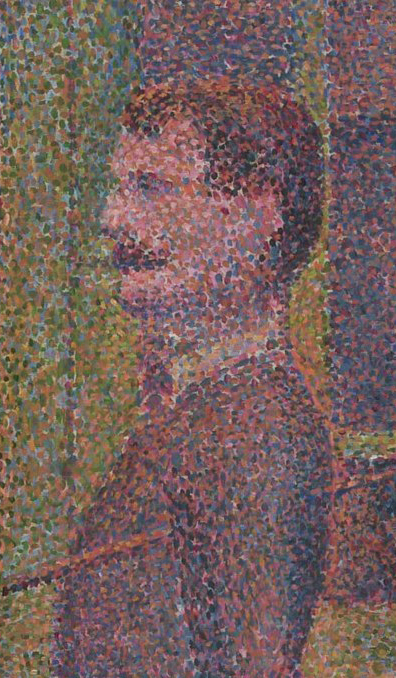
Impressionism originated from Paris, France by a group of artists that wanted to show a modern looking style of life. During this time, artists were preoccupied with the expression of feelings and ideas. Impressionist wanted to invent a new technique and style on how to handle colour. Their work also revealed personal and spiritual direction. Characteristics of impressionist art style were that the artist gave importance to shape and distorted the forms. Artists also usually painted on the spot as well. A new technique on how to handle colour was also introduced during this movement called pointillism. This consisted of a lot of coloured dots next to each other that from a distance one would see a picture. The main artists during the Neo-impressionism movement were Seurat and Signac while Post-impressionism were Van Gogh, Gaugin and Cezame. At that time, this art style was greatly different and original and other paintings, thus many critics rejected this style as they found it to be unfinished or “sketch-like”.

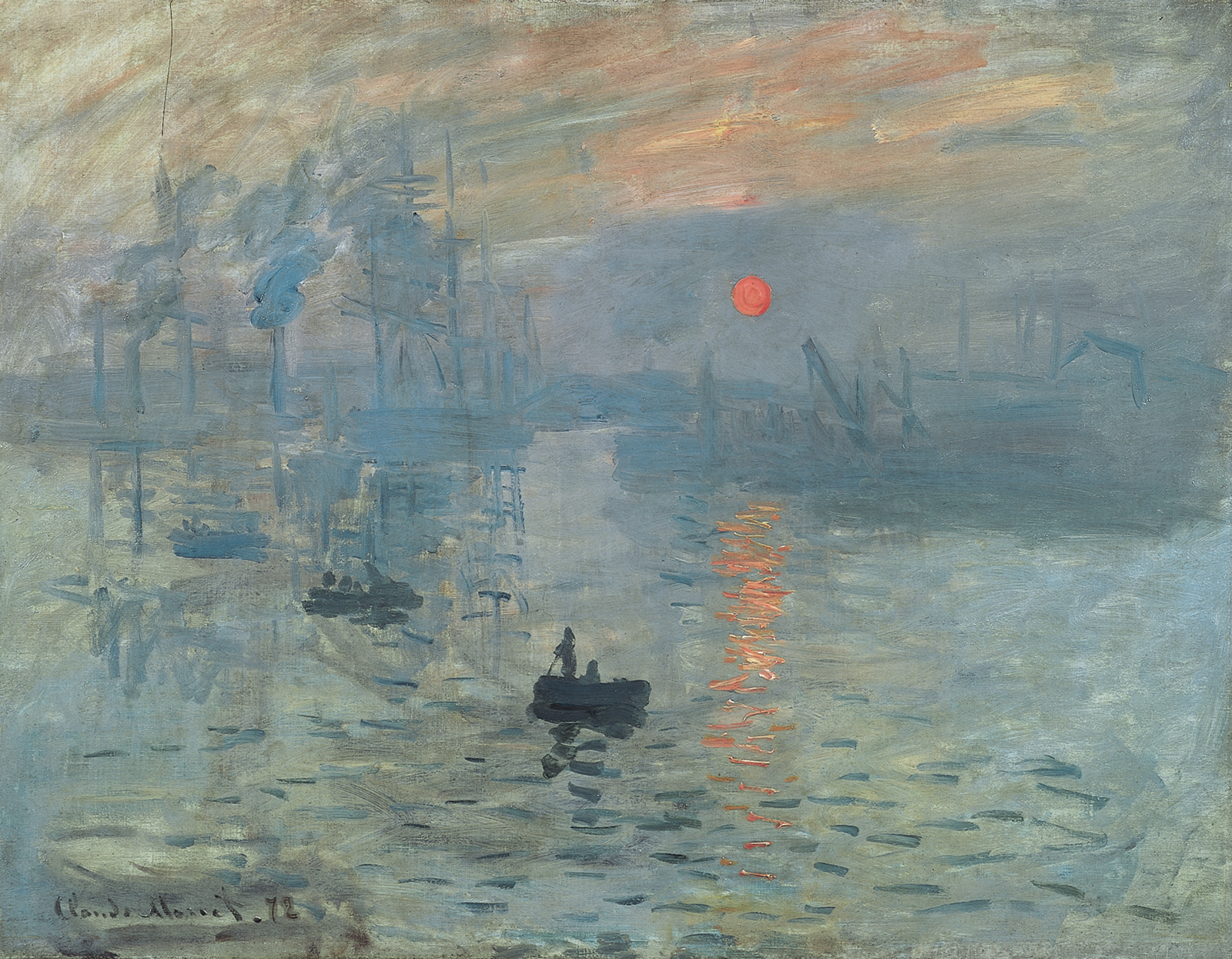
Impression Sunrise – Claude Monet
This painting my Claude Monet was the painting that gave birth to the style of Impressionism. The unique style of this painting during that time wasn't praised by critics as well. Today it is praised for the movement that it had accomplished to create. Although Monet used simple brush strokes and simple colours, he still managed to achieve the illusion of a picture and even manage to create a lot of movement in the ripples with the use of small repeated lines. Monet also managed to create the illusion of depth with the use of atmospheric perspective as well. What makes this painting interesting is the intense red sun. Since all of the composition is blue, the small yet intense red colour at the center manages to balance out the whole painting. It also makes the viewer to focus on the sun more. In my personal opinion, the painting gives out a relaxed and calm impression because of the warm blue colour. I also find that the lone boat in the middle further increases the calmness of the scene as well. The rising Sun and the reflections give a focus point to the viewer and in my opinion, breaks repetition as well.

On The Way To Morning - Leonid Afremov 
This contempory pointism painting shows a beautiful nighttime scene. The artist clearly focused on the lighting and reflectivity of the lights themselves. The technique itself helps the artist to create beautiful reflections of the surroundings. The painting is well balanced with warm and cold colours as well.

References
1.) The National Gallery, The Guide to Impressionism, Available from: http://www.nationalgallery.org.uk/paintings/learn-about-art/guide-to-impressionism/guide-to-impressionism. [19 November 2014]
2.) Samu, Margaret, Impressionism: Art and Modernity, Available from: http://www.metmuseum.org/toah/hd/imml/hd_imml.htm. [19 November 2014]
3.) Yurasits, Analysis of Claude Monet's Impression Sunrise, Available From: http://blogs.longwood.edu/incite/2012/01/30/analysis-of-claude-monet%E2%80%99s-impression-sunrise/ [19 Novemeber 2014]

Sunday, 26 October 2014

The Pre Raphaelites

The Pre Raphaelites
The Pre Raphaelites were a group of English painters and critics that wanted to eliminate the predictability of academic art and go for a more direct, intensely coloured and simple approach of Italian painters before Raphael. Thus they focused to start emulating art from the late medieval to early Renaissance. The subject of the paintings varied but they drew inspiration from literary sources that gave them moral themes or stories. Because of this, they were quite loved by the Victorians. The Pre Raphaelites grew some controversy as well as they produced works with the subject of prostitution, religion and emigration as well. The founders of this group were John Everett, William Holman Hunt and Dante Gabriel.


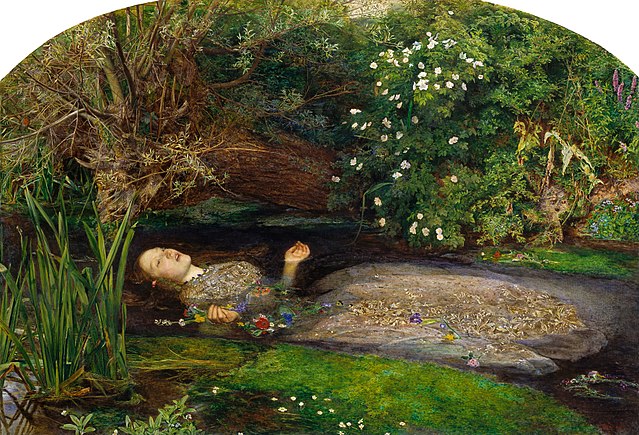
Ophelia by John Everett 1851-1852
This painting by John Everett depicts the character of Ophelia from the Shakespeare play “Hamlet”. She is shown to be singing before drowning. The painting shows a very beautiful and realistic portrayal of nature. The woman is also highly detailed with a very decorative dress. I find that there is a balance in tone with her pale white skin and brightly coloured dress with the dark coloured water beneath her. This helps to bring out the character more. What I find interesting is the balance of the beauty of nature with that of death as well. It gives an ironic effect in my opinion. The balance of value is also present. I believe the dark toned shadows on the foliage help to enhance the colours more.


 An interesting aspect of this particular painting is that there is a form of a skull on the foliage. Although there is no evidence if this was intended or not, I find it quite well placed as it indirectly depicts the faith of Ophelia. This indirectly gives also a balance with the beauty of the scene.


References
1.) The Pre Raphaelites Brotherhood, Available from: http://en.wikipedia.org/wiki/Pre-Raphaelite_Brotherhood [18 October 2014
2.) Meagher, The Pre Raphaelites, Available from: http://www.metmuseum.org/toah/hd/praf/hd_praf.htm [18 October 2014]
3.) Tate, Opehial's Symbolism, Available from: http://www.tate.org.uk/learn/online-resources/ophelia/subject-and-meaning/ophelias-symbolism [18 October 2014] 

Saturday, 25 October 2014

19th century Realism

Realism
The Realism art movement generated from 19th century France after the French Revolution. The main aspect of this movement was that it didn't depict any exaggerated drama or propaganda that was very common during the 18th century, but instead it depicted scenes of ordinary common people during their everyday activity such as working or even nature. Colours in Realism art is not exaggerated as well, instead, artists use natural colour to give a more realistic look. It is also very common that artists balanced out the paintings using warm and cold colours and also balancing out the scenery with the people in the area to help the viewer to focus on specific areas. Realism later helped the development of photography in the later future as well. Nowadays, Realism is still being practiced by many artists but the subject of the paintings has changed more to nature scenery than to people working.

The End of the Working Day 1886-87
This painting by Jules Breton depicts a beautiful scene of women working on the field. At first glance, one would automatically look at the sun because of its position and its intense orange colour. The colour of the women’s clothing, especially the one with the shovel, balances out the intense warm colour of the sun. Breton has also positioned the women at the center of the scene to give more focus on them. I also believe that this helps to balance the field background with the people as well. Breton has also balanced out the positive and negative space of the sky and the field. I find that the shade contrasts and enhances the colour of the scene as well. It is also quite interesting to note that the struggle of what the women are experiencing with the beautiful scenery creates a quite ironic scene.

She’s Mine
This contemporary painting by Cathy McCelland shows a very calm and beautiful landscape. The balance of colour of yellows, greens and blues give out beautiful effect. I also find that the tree and the birds balance out the negative space of the blue sky as well. The atmospheric perspective further enhances the realism of the paintings as well.

1.) Realism (art movement). Available from: http://en.wikipedia.org/wiki/Realism_(art_movement) [13 October 2014].

2.) Finocchio Ross. Nineteenth-Century French Realism. The Metropolitan Museum of Art. Available From: http://www.metmuseum.org/toah/hd/rlsm/hd_rlsm.htm, [13 October 2014]